




Tea, Mental Wellbeing and the Luxury of Slowing Down
There are some days when the world seems to ask for everything from us at once. Wake up, check the phone, answer the messages, get to work, meet the deadline, reply to the email, make the appointment, remember the birthday, finish the presentation, and somehow still find time to take care of yourself. We have become remarkably good at moving quickly. What we have become less comfortable with is stopping. Perhaps that is why something as simple as making a cup of tea can feel so different. It...
There are some days when the world seems to ask for everything from us at once. Wake up, check the phone, answer the messages, get to work, meet the deadline, reply to the email, make the appointment, remember the birthday, finish the presentation, and somehow still find time to take care of yourself. We have become remarkably good at moving quickly. What we have become less comfortable with is stopping. Perhaps that is why something as simple as making a cup of tea can feel so different. It asks us to do something that modern life rarely does: pause.
World Mental Health Day is a reminder that mental wellbeing deserves attention, not only when we are struggling, but as part of how we live every day. The World Health Organization describes mental health as an important part of overall wellbeing, affecting how we cope with life's stresses, work, learn and contribute to our communities. Tea, of course, is not a cure for anxiety, depression or any mental health condition, and a cup of tea should never replace professional support when it is needed. But the ritual surrounding tea can offer something beautifully simple: a moment where we deliberately step away from the noise.
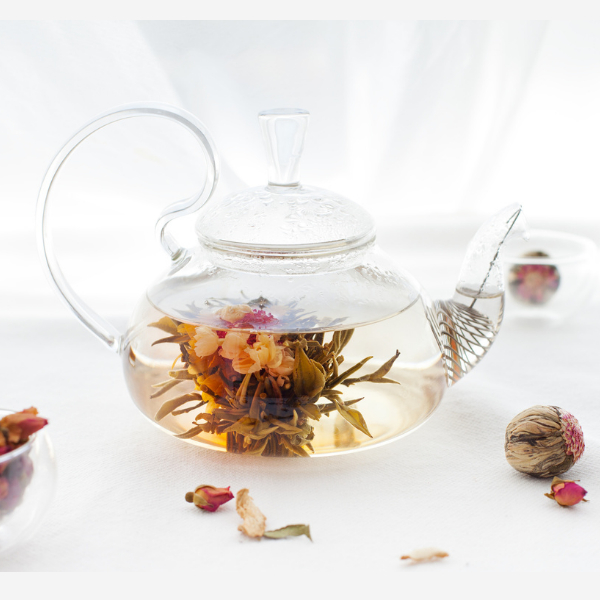
Think about what happens when you make tea. You choose the cup. You heat the water. You select the leaves. You wait. Perhaps you watch the colour slowly develop in the water. Perhaps, with a blooming tea, you watch the flower gradually unfold. Then you take the first sip. None of these things are particularly extraordinary on their own. Yet together, they create a sequence of small actions that bring your attention back to the present. For someone who spends most of the day moving between screens, notifications and conversations, that change of pace can be surprisingly restorative.
There is also growing scientific interest in tea's relationship with stress, mood and cognition. Tea naturally contains compounds such as L-theanine, an amino acid particularly associated with tea, which has been studied for its potential effects on relaxation, stress and attention. Research has suggested that L-theanine may have beneficial effects under stressful conditions, although scientists continue to study the extent and long-term significance of these effects. This is an important distinction: we do not need to turn tea into a medical promise to appreciate what it can contribute to our everyday wellbeing.
Perhaps the more meaningful benefit is psychological rather than physiological. A ritual creates a boundary. Morning tea can tell your mind, the day is beginning. Afternoon tea can say, take a breath. Evening tea can quietly signal, the work is done. These small rituals matter because our days often have very few natural stopping points. Without them, one task simply becomes another until we realise that an entire day has passed without us ever really being present for it.
This is especially relevant in Singapore, where life can move at an extraordinary pace. We live in a city known for efficiency, ambition and convenience. Everything is designed to happen quickly. Food arrives quickly. Transport is efficient. Communication is instant. Even shopping can happen without leaving home. These things are wonderful conveniences, but perhaps there is something we lose when everything becomes immediate. We lose the anticipation of waiting. We lose the pleasure of taking our time.
Tea gives some of that time back.
There is something particularly beautiful about blooming tea because the flower cannot be hurried. You place it in hot water and wait for it to reveal itself. The petals slowly begin to separate. The shape becomes visible. The bloom opens. It is almost impossible to watch it without slowing your own breathing for a moment. At Pétale Tea, this is part of why we have always been drawn to blooming tea. The flower is not simply decoration. It becomes part of the experience and, in many ways, part of the story we want to tell.
We often talk about becoming, but becoming is not something that happens at speed. People change slowly. Healing can be slow. Confidence can be slow. Learning to love yourself can be slow. Some of the most important changes in our lives happen quietly, long before anyone else notices them. A flower does not apologise for taking time to bloom. Perhaps we should not either.
So, the next time you make tea, try giving yourself permission not to multitask. Put your phone down. Sit somewhere comfortable. Notice the aroma before you taste it. Watch the colour. Take a slower sip. Give yourself five minutes where you do not have to achieve anything. You may discover that the luxury was never really in the tea itself. It was in the time you allowed yourself to experience it.
Tea can become a small ritual for life's bigger moments. A ritual of gratitude. A ritual of connection. A ritual of reflection. And sometimes, simply, a ritual of rest. Because in a world that constantly tells us to keep moving, choosing to pause is not unproductive.
It is an act of remembering that you are human.