

From Leaf to Teapot: The Journey of a Blooming Cup
Discover how blooming tea is hand-tied with care — from misty gardens to your teapot. A journey of patience, artistry, and nature’s quiet beauty. Keywords: blooming tea, tea journey, flower tea, how tea is made, blooming tea Singapore, hand-tied tea, Pétale Tea, tea ritual, tea workshop When a Cup Becomes a Story When we pour a cup of tea, it feels like such a simple act — water, leaves, steam, bloom. Yet within that cup lies centuries of tradition, months of patience, and the quiet...
Discover how blooming tea is hand-tied with care — from misty gardens to your teapot. A journey of patience, artistry, and nature’s quiet beauty.
Keywords: blooming tea, tea journey, flower tea, how tea is made, blooming tea Singapore, hand-tied tea, Pétale Tea, tea ritual, tea workshop
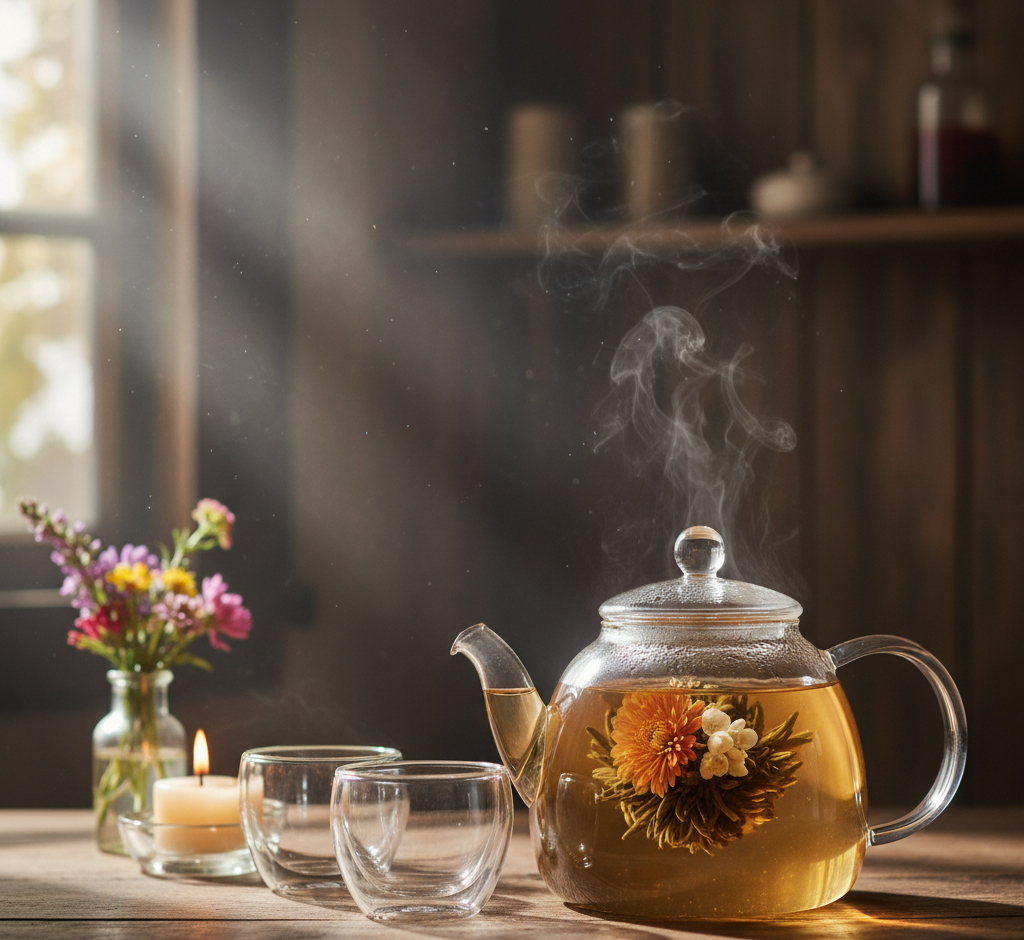
When a Cup Becomes a Story
When we pour a cup of tea, it feels like such a simple act — water, leaves, steam, bloom. Yet within that cup lies centuries of tradition, months of patience, and the quiet dedication of countless hands.
Blooming tea, in particular, is not just a drink; it’s a living story — one that unfolds right before your eyes.
Harvesting with Care
Every tea leaf begins its journey in highland gardens kissed by morning mist and sunshine. Skilled tea pickers — often women whose craft has been passed down for generations — rise with the dawn to pluck only the youngest buds and the first two tender leaves.
These “first flush” harvests are prized for their delicate aroma and light, refreshing flavour, capturing the pure essence of the season in each leaf.
Withering & Rolling
Once gathered, the leaves are spread out to wither — a process that gently reduces moisture and deepens flavour. When the leaves are supple, they’re hand-rolled to release natural oils and enzymes.
This is when tea begins to take on its soul — the subtle notes and fragrance that will later bloom in your teapot.
Oxidation & Drying
The beauty of tea lies in transformation.
• Minimal oxidation creates green tea — fresh, grassy, and light.
• Partial oxidation gives us oolong tea — floral, balanced, and aromatic.
• Full oxidation results in black tea — rich, bold, and malty.
Once the desired flavour is achieved, the leaves are dried to preserve their character, locking in the story of the harvest.
The Art of Blooming Teas
What makes blooming tea so special is the artistry behind it. Each tea ball is hand-tied with edible flowers — jasmine, osmanthus, chrysanthemum, or marigold — using fine cotton threads.
Every bloom is shaped with intention, designed to slowly unfurl in hot water like a flower opening to the morning sun. This intricate process transforms every cup into a performance of patience and beauty.
From Nature to Ritual
After being packed and shipped, the journey continues — with you.
When hot water meets tea, time slows. As the leaves unfurl and the flowers bloom, you become part of the story.
In that quiet moment, you’re not just drinking tea — you’re connecting with nature, tradition, and mindfulness.
How to Brew Blooming Tea
To enjoy the full bloom, brew with care:
1. Place one blooming tea ball in a clear glass teapot or large cup.
2. Pour 400ml of hot water (95–100°C) over the tea ball.
3. Allow 8–10 minutes for the bloom to open completely.
4. Watch, breathe, and sip slowly.
5. Re-steep up to 2–3 times — each infusion offers a new taste and fragrance.
Tip: Use a transparent pot to witness the bloom’s graceful dance in water.
A Bloom Beyond Taste
Blooming tea is more than a beverage — it’s a meditation in motion.
It reminds us that beauty unfolds with time and care, and that a small ritual can bring calm in our busy days.
So, the next time you sip, pause for a moment.
Your tea has journeyed from distant gardens, through many loving hands, across oceans — all to bloom beautifully, just for you.
Blooming Teas
Petale Signature Gift Sets
Blog